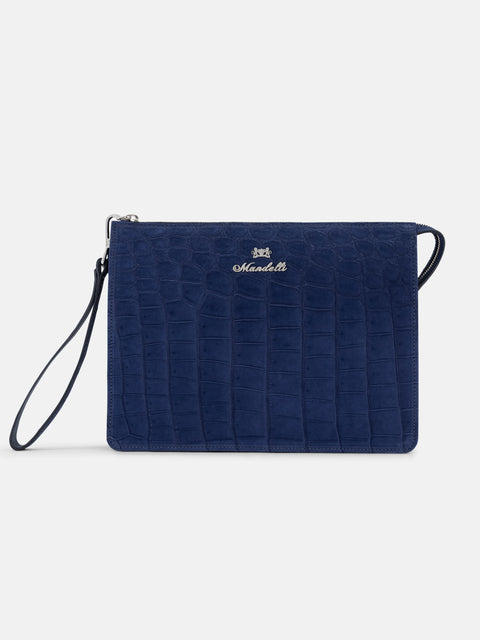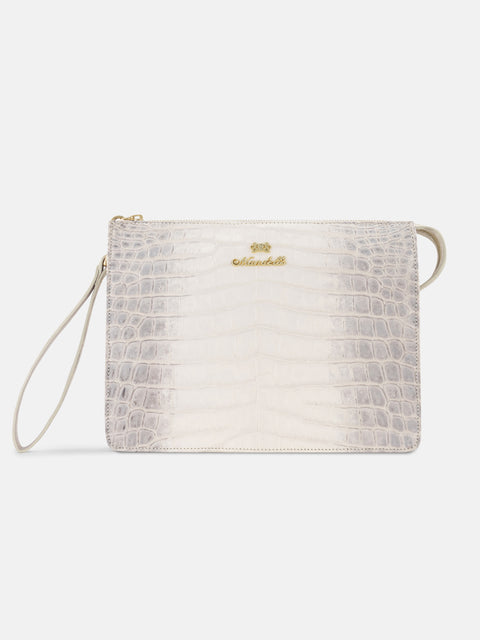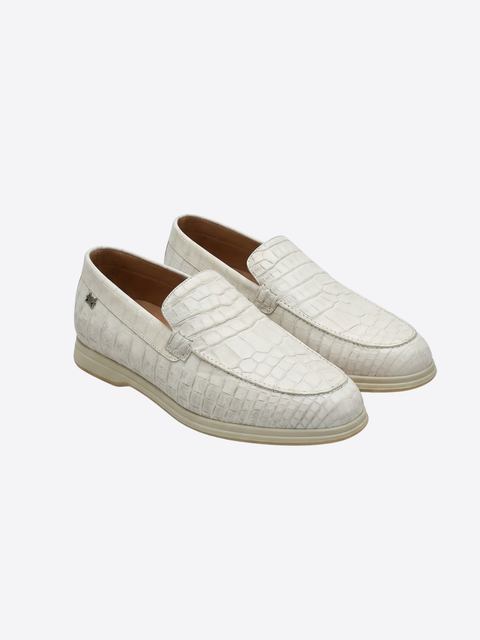


Exotic leather refers to leather made from animals other than the usual cattle, sheep, goat, or pig. In luxury menswear and accessories, it is mainly used for its distinctive texture, pattern, and premium appearance.
Exotic leather begins with the character of the hide. Its natural pattern, texture and variation become part of the finished piece, leaving little room for careless cutting or construction.
The work starts before the first seam. The hide must be selected for its surface, considered for its pattern and cut with an understanding of how the material will sit within the garment.
For Mandelli, this material-first approach reflects a wider Italian leather tradition. The material informs the construction, while the construction gives the material its shape.
Where Exotic Leather Meets Italian Craft
Italy has a long relationship with leather, shaped by generations of knowledge in tanning, cutting and making. That knowledge becomes particularly important when working with skins whose natural character cannot be made completely uniform.
Crocodile, for example, brings its own scale structure and variation to every hide. The pattern can influence the placement of panels, the proportions of a garment and the way the finished piece reads as a whole.
This relationship between material and construction is central to Italian leather jackets. Leather is not simply treated as a surface placed over a predetermined shape. Its qualities are considered alongside the form of the garment.
Mandelli's leather heritage follows the same principle, keeping material and making it closely connected.
The Material Sets the Direction
Everything begins with the hide.
Before exotic leather becomes one of a collection of designer leather accessories, its texture, consistency and usable areas need to be considered. With crocodiles, the scale pattern becomes part of the design itself.
A cutter has to think beyond a single panel. The chest, shoulder, sleeve and adjoining sections need to work together, allowing the natural pattern to remain considered across the finished piece.
The finish changes the character of the leather, too. A polished surface catches light differently from a softer, more muted finish. Natural variation adds another layer, giving each hide its own visual identity.
This becomes especially apparent in luxury crocodile leather jackets, where scale structure can become one of the garment's defining features.
Mandelli's crocodile nubuck outerwear offers one expression of this material-led approach. The surface remains central to the design rather than being hidden beneath unnecessary decoration.
When looking closely at fine leather, colour tells only part of the story. Texture, suppleness, surface consistency and the way the material moves with the garment reveal just as much.
Why Crocodile Demands Precision
Crocodile is immediately recognisable for its natural scale structure. Unlike an embossed pattern, genuine crocodile retains the physical characteristics and variations of the original hide.
No two skins present exactly the same surface.
That individuality gives the material its character, but it also demands careful planning. Scale size, pattern and natural variation influence how the hide can be positioned across the finished garment.
For exotic leather jackets for men, this becomes particularly visible across larger surfaces. The cut needs to give the leather enough space to speak without allowing the pattern to overwhelm the silhouette.
This balance is important to Mandelli's approach to exotic outerwear. The leather provides the visual character, while the cut and construction give it context.
The distinction between genuine crocodile and embossed leather also lies in the surface itself. Embossing can imitate the appearance of scales, but it cannot reproduce the natural variation and physical structure of an original hide.
Exotic Leather in the UAE
A leather jacket has a different role in the UAE than it does in a colder climate.
Warm outdoor temperatures, humid conditions and heavily air-conditioned interiors make weight, construction and layering important considerations. A leather piece may be worn more naturally during cooler evenings, travel or indoors rather than as a conventional winter layer.
Finish can influence how easily it works within a wardrobe. A restrained surface can sit comfortably alongside tailored clothing without competing with it.
Colour matters in a similar way. A brown leather jacket in tobacco or chestnut can work naturally with navy, grey and ivory, allowing the texture of the leather to remain the focus.
Mandelli's deer leather blouson offers another expression of Italian leather craftsmanship. Its softer character gives leather a more relaxed presence, suited to travel, evenings and informal dressing.
For those considering premium leather jackets in Dubai, the material itself is only one part of the decision. Weight, finish and construction should reflect how the garment will actually be worn.
Care Should Follow the Leather
Fine leather benefits from considered care rather than constant intervention.
Store a leather garment on a broad-shouldered hanger to help retain its shape. Keep it away from direct sunlight, excessive heat and prolonged exposure to moisture. Avoid storing leather in plastic for extended periods.
Care should also follow the particular leather and finish. A product intended for smooth calfskin should not automatically be applied to an exotic finish. The maker's care instructions should take precedence, particularly for specialised skins.
For minor surface marks, a soft, dry cloth is preferable to aggressive cleaning. More significant treatment is better left to a leather specialist.
The aim is not to keep leather looking untouched. Natural character is part of its appeal. Good care simply helps preserve the qualities that make the material distinctive.
When Craftsmanship Becomes Part of the Material
The character of a fine leather garment is established long before it reaches the wardrobe.
It begins with the hide, continues through selection and cutting, and takes shape through construction and finishing. The species provides the starting point. Craftsmanship determines what happens next.
That is why two garments made from the same type of leather can have completely different character. The difference can lie in the choice of hide, the placement of its natural pattern, the proportions of the garment or the precision of its construction.
Mandelli's approach centres on this relationship between material and making, from distinctive crocodile outerwear to deerskin pieces and more understated Italian leather jackets.
The result does not need excessive decoration to make an impression. Texture, construction and silhouette carry the character of the piece.
That is perhaps the quieter expression of luxury: when the material and the craftsmanship are strong enough to speak for themselves.
<=== START FAQ ===>
Frequently Asked Questions
What does "exotic leather" mean?
Exotic leather refers to specialised animal skins such as crocodile, alligator, python, lizard and ostrich, each with its own natural texture and pattern.
What type of leather do luxury brands use?
Luxury brands work with materials such as calfskin, lambskin and deerskin, alongside selected exotic leathers such as crocodile and alligator.
Why is crocodile leather considered a luxury material?
Crocodile has a distinctive natural scale pattern, while its selection, cutting and construction require close attention to the character of each hide.
How can you tell if crocodile leather is genuine?
Genuine crocodile leather generally shows natural variations in scale size, shape and texture rather than a perfectly repeated pattern. Product documentation from the maker can also help establish authenticity.
<=== END FAQ ===>
For a closer look at Italian leather craftsmanship, view Mandelli's leather jackets, from understated leather layers to distinctive exotic outerwear.
Visit the Mandelli boutique at The Dubai Mall to experience the materials, construction and finishes in person.
Each material covered above lives in its own edit — tap through to shop the collection built around it.