

Italian tailoring is a conversation between cloth, construction and proportion.
Its sophistication rarely comes from excess. It comes from the way a shoulder follows the body, a collar settles at the neck and a fabric moves through the day. Softer construction, natural movement and considered proportions give a garment its character without asking for attention.
In Italian luxury menswear, quality often lives in the details that are easiest to overlook. A well-balanced shoulder. A collar that sits naturally. Cloth that recovers after wear. Patterns that meet precisely across a seam.
A label tells you where a garment comes from. Construction tells you how it was made.
The Italian Approach to Tailoring
Italian tailoring has never been defined by a single silhouette. Its character comes from the regional traditions and specialist knowledge that have developed across the country.
Naples became known for softer construction, lighter padding and a natural shoulder that allows a jacket to move almost like a shirt. Mandelli brings its own composed reading to Italian menswear, balancing structure with ease and maintaining a considered sense of proportion.
Behind these traditions sits a wider network of mills, cutters, tailors and manufacturers. Their expertise gives an Italian menswear collection its depth. Fabric is not simply placed over a garment. It influences how the garment falls, moves and develops with wear.
That is where the character of premium Italian clothing begins: in the relationship between material, construction and proportion.
Where Construction Meets Proportion
The most revealing details of a tailored garment are often the quietest ones.
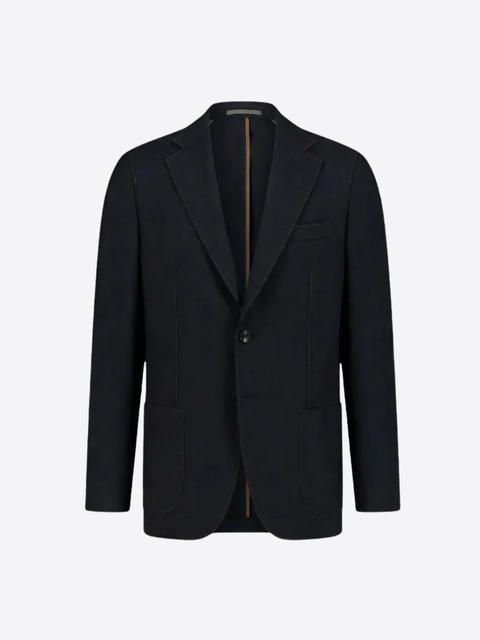
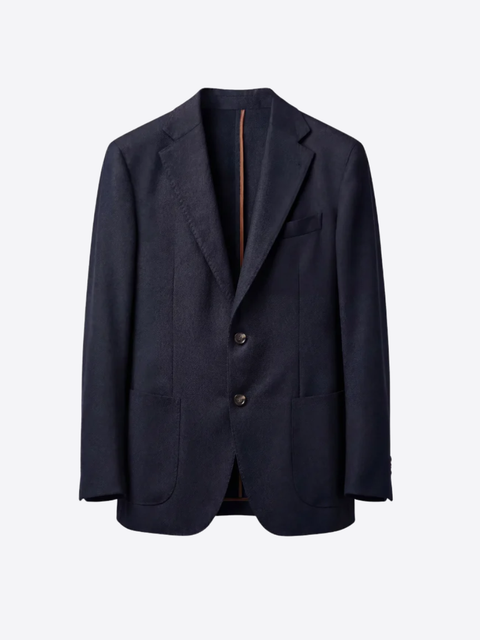
A garment such as the Virgin Wool & Cashmere Blazer shows how structure and ease can exist together. Crafted in Italy from virgin wool and cashmere, it uses a soft-shouldered, deconstructed construction with light internal finishing, allowing the silhouette to retain sartorial precision without becoming rigid.
The shoulder is one place to begin. The seam should sit naturally where the shoulder ends, while the sleeve should fall cleanly without unnecessary tension.
Then look closer.
-
Collar: It should sit cleanly against the neck without an obvious gap.
-
Buttonholes: Precise stitching and careful finishing can reveal attention to detail.
-
Pattern matching: Checks and stripes should meet naturally across pockets, seams and panels.
-
Buttons: Natural materials can carry subtle variations rather than appearing perfectly uniform.
-
Stitching: Even, controlled stitching contributes to both appearance and construction.
These details rarely announce themselves. They are simply felt in the way a garment comes together.
Fit follows the same principle. It is not about making a garment tight. It is about giving each part enough room to move while maintaining its intended line.
A well-cut jacket follows the natural shape of the shoulders and torso. Trousers sit comfortably at the waist and fall cleanly through the leg. Proportion gives the garment its ease.
The Fabric Speaks First
Fabric tells part of the story before the garment does.
Fibre fineness can influence softness and handle, but a higher fineness number does not automatically make a cloth better. Weave, weight, durability, construction and intended use all shape how a fabric performs.
A finer cloth may feel exceptionally light and refined. A more substantial fabric may offer greater resilience for regular wear. The right choice depends on what the garment is expected to do.
The principle extends beyond tailoring.
A well-made Italian dress shirt balances the hand of the fabric with the structure needed around the collar and cuffs. The Silk & Cotton Buttonless Polo takes the same approach through a fine knit in a 55% silk and 45% cotton blend, with ribbed finishing that gives the lightweight piece structure.
The Pure Cotton Knitted T-Shirt follows a similar logic. Knitted in Italy from pure cotton, its fine knit construction gives the piece a smooth, lightweight feel, while ribbed trims provide structure and a tailored finish.
Luxury is therefore not simply a question of choosing the finest or rarest material. It is choosing the material that allows the garment to become what it is meant to be.
Tailoring for the Dubai Rhythm
Dubai calls for a considered approach to dressing, shaped by its warm climate, cool interiors and varied social settings.
A garment can move from warm, humid streets into heavily air-conditioned interiors within minutes. The answer lies in finding an accurate balance between breathability, structure and ease.
For tailoring, open weaves and lighter constructions can encourage airflow. High-twist wool is valued for its ability to recover from creasing, while linen and selected blends offer a more relaxed character where the occasion allows.
Construction matters as much as cloth. A lightly constructed or partially lined jacket can feel less restrictive than a garment built for a colder climate.
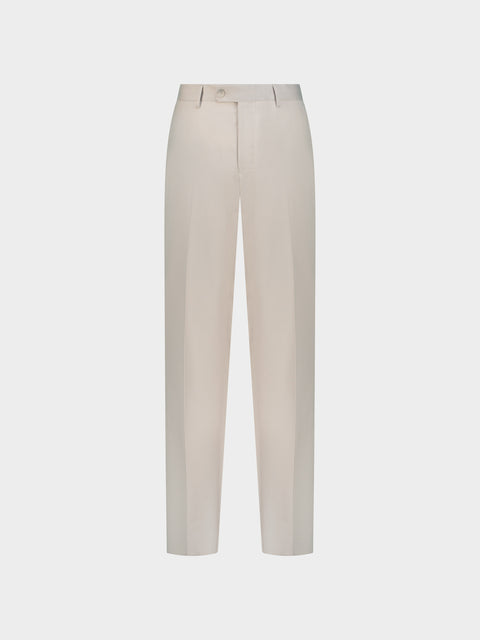
The same principle continues below the waist. The BOSTON Pure Wool Flat-Front Trousers are crafted in Italy from pure wool, with a flat-front design, tailored fit and clean, streamlined leg. Their balanced proportions allow them to move between refined and more relaxed dressing.
For Dubai weekends, travel and informal lunches, Italian tailored shorts carry the same attention to proportion into more relaxed settings.
The distinction is not simply between classic and casual. It is between clothing that has been considered and clothing that has not.
The Details That Hold It Together
A considered wardrobe begins with the garment itself.
Fabric speaks through hand, weight, weave and expected performance.
Construction reveals how the garment has been assembled and supported.
Fit shows whether the piece follows the body naturally.
Finishing brings attention to details that are easy to overlook.
Proportion determines how the garment works with the rest of the wardrobe.
Versatility gives a piece relevance beyond a single occasion.
Together, these details create the quiet coherence of Italian luxury menswear.
A jacket that works with tailored trousers, a fine knit or more relaxed separates naturally finds more opportunities to be worn. The same principle carries through a broader wardrobe, from Italian luxury polo shirts to tailored trousers and outerwear.
The result is not a wardrobe built around accumulation, but one built around pieces that hold their place.
Where the Work Shows
Craftsmanship rarely announces itself to a room.
It shows itself to the person wearing the garment: in the edge of a leather panel, the evenness of a stitch line, the way a collar sits, or how a fabric responds after a day of movement.
Mandelli's history began with leather before developing into a broader expression of Italian menswear. The house remains rooted in Italian production, material expertise and a vertically integrated approach to craftsmanship.
That philosophy extends across different materials. Leather, wool, cashmere, cotton, silk and linen each ask something different of the maker. The common thread is the attention given to how material, construction and proportion work together.
Italian tailoring is therefore not one fixed formula. Its regional traditions speak in different accents, but the underlying instincts remain familiar: respect for material, attention to proportion and restraint in execution.
In the end, the measure is quiet.
What is it made from? How is it built? How does it move?
A beautiful fabric cut incorrectly can lose its character. Careful construction cannot compensate for the wrong material. When both are considered together, the result rarely needs explanation.
It is there in the jacket that sits correctly, the leather that develops character through use and the fabric that reveals more of itself the longer it is worn.
The current Mandelli collection carries this approach across outerwear, knitwear, tailoring and leather, with the same language continuing at the Mandelli boutique in The Dubai Mall.
<=== START FAQ ===>
Frequently Asked Questions
How can you tell whether a jacket is well made?
Look at the construction, shoulder, collar, stitching, buttonholes, fabric and fit. Pattern matching and clean finishing can also reveal attention to detail.
Does a higher fabric fineness number mean better quality?
Not necessarily. Fibre fineness is only one consideration. Weave, weight, durability and intended use are equally important.
What makes Italian tailoring different?
Italian tailoring encompasses several regional traditions, from the softer construction associated with Naples to more composed approaches such as Mandelli's. What connects them is attention to proportion, material and craftsmanship.
What fabrics work well for tailoring in Dubai?
Lightweight and breathable fabrics can be useful in warm conditions. Open-weave fabrics, selected high-twist wools and linen blends can offer a balance between comfort and structure, depending on the garment and occasion.
What should I look for in Italian luxury menswear?
Start with fabric, construction, fit and finishing. Then consider how naturally the garment works with the rest of your wardrobe rather than judging it by branding alone.
<=== END FAQ ===>
A considered wardrobe begins with understanding what makes a garment worth keeping. Explore Mandelli's approach to Italian craftsmanship through its tailored collections, or visit the Mandelli boutique at The Dubai Mall to experience the materials and construction in person.
Each material covered above lives in its own edit — tap through to shop the collection built around it.